Back when I was still competing in mountain running, I believed the answer to better movement was pretty simple — more training, more strength, more discipline. For a long time, that approach worked. But then injuries started to repeat themselves, along with a growing sense that, despite good physical fitness, my body just wasn’t moving as lightly and efficiently as it should.
I see a similar pattern today in people who move recreationally — regular walkers, cyclists, gardeners, or simply people who want to go about their daily activities without pain. Even so, they’re often held back by tension, stiffness, or pain in the back, knees, feet, or neck.
Over time, I realized the answer often isn’t that a particular muscle is too weak. More often, the real question is how efficiently the body transfers force through the whole system during movement. And that’s exactly where fascia comes into the picture.
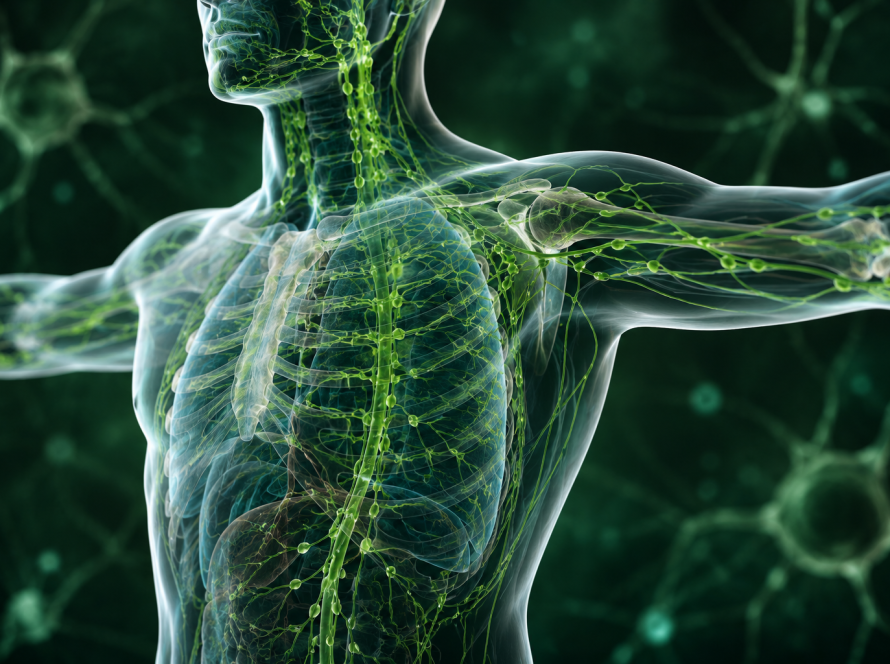
Fascia is the connective tissue that surrounds and links muscles, tendons, ligaments, nerves, and internal organs into one continuous, three-dimensional network. If you could pull it out of the body as a single piece, you’d end up with a kind of elastic “web” connecting every part of the body to every other part.
What exactly is fascia?
For a long time, fascia was seen mainly as a passive wrapping around muscles. Today, research shows it’s actually a dynamic, highly active tissue that plays a significant role in how we move.
Its job isn’t to generate movement — that’s still the muscles’ work. But fascia is what allows force to be transferred efficiently through the body during movement. It acts as a connecting system that coordinates cooperation between different muscle groups, stores some elastic energy, and contributes to that feeling of lightness in movement.
That’s exactly why two people can have similar muscle strength, yet one moves freely and efficiently while the other feels stiff, tired, or in pain.
Fascia is also extremely rich in nerve endings, which means it plays an important role in body awareness, balance, and coordination. It isn’t just muscle “packaging” — it’s a key part of the entire movement system.
Why does fascia adapt more slowly than muscle?
When we start training regularly, muscles get stronger relatively quickly. Connective tissue needs far more time.
Fascia is built mainly from collagen fibers, which are constantly being remodeled and adapted to mechanical load. This process is significantly slower than muscle adaptation and can take weeks or even months.
That’s why quick changes usually aren’t lasting ones.
If we want to improve mobility, reduce chronic tension, or change the way we move, what we mainly need is:
- regular movement,
- a variety of loads,
- enough time for recovery,
- patience.
Our bodies don’t change overnight. Tissues adapt gradually, over the long term.
Fascia regeneration doesn’t start with movement alone
Movement is the signal that tells the body it needs to adapt. But without proper recovery, that signal doesn’t have its full effect.
Every step, run, lift, or stretch causes microscopic changes in connective tissue. The body responds by rebuilding collagen fibers — but for that, it needs enough energy and the right nutrients.
The most important factors are:
- quality sleep,
- good hydration,
- adequate protein intake,
- and vitamin C.
Why is vitamin C so important for fascia?
When we talk about fascia, we’re really talking mostly about collagen.
Collagen is the main structural protein of fascia, tendons, ligaments, cartilage, skin, bone, and many other connective tissues. For the body to produce it normally, it needs vitamin C.
That’s not just a recommendation — it’s a biological fact.
Vitamin C contributes to normal collagen formation for the normal function of bones, cartilage, skin, and blood vessels. Without enough vitamin C, the body simply can’t synthesize new collagen efficiently.
In other words, movement on its own isn’t enough.
If the body is short on the key nutrients it needs for repair, tissue adaptation will be slower too.
Vitamin C also acts as an important antioxidant. Physical activity generates free radicals, and vitamin C helps protect cells from oxidative stress while supporting normal immune function.
Because our bodies can’t produce vitamin C on their own and don’t store large amounts of it, we need to supply it regularly through diet or supplementation.
Why are more and more people choosing liposomal vitamin C?
When it comes to supplements, it’s not just the amount of vitamin C that matters — the form matters too.
Liposomal vitamin C is designed so that the vitamin C is surrounded by tiny phospholipid spheres called liposomes. These help protect the vitamin C as it passes through the digestive system and can improve its bioavailability compared to some conventional forms of vitamin C.
That’s exactly why the liposomal form appeals to people who want to give their bodies effective nutritional support — especially during periods of higher physical strain or increased vitamin C needs.
Many people also choose it because it’s typically well tolerated by the digestive system, even at higher doses.
At Ekolife, we believe that the long-term health of connective tissue comes down to two equally important factors:
proper movement and adequate nutritional support.
Movement tells the body it needs to adapt. Vitamin C contributes to the normal formation of collagen, the fundamental building block of fascia. The two work hand in hand.
What can you do starting today?
Healthy fascia doesn’t require a complicated program.
Far more benefit comes from a handful of simple habits practiced every day.
✔ Take care of good mobility in your ankles, hips, and feet.
✔ Walk on varied natural terrain whenever it’s safe to do so.
✔ Bring elasticity, rotation, and changes of direction into your movement — not just repetitive motions.
✔ Don’t forget to breathe, since it reduces unnecessary muscle tension.
✔ Occasionally include gentle fascial exercises or relaxation techniques.
✔ Make sure you get enough sleep, hydration, and quality nutrition.
✔ Get a regular intake of vitamin C, which contributes to normal collagen formation.
Small habits practiced every day have a far greater long-term effect than occasional intense efforts.
What does the science say?
Over the past twenty years, fascia research has advanced significantly. Today, researchers view it as an important part of the movement system — no longer just a passive wrapping around muscle.
We know it plays a role in transmitting muscular force, sensing movement, stability, and coordination. It’s also constantly adapting to mechanical load, and its repair depends both on quality movement and on adequate nutritional support.
Collagen remains its most important building block, and vitamin C is essential for its normal formation.
While fascia research continues to raise new questions, one thing is already clear: the health of fascia doesn’t depend on a single miracle exercise or supplement. It’s the result of everyday choices — how we move, how well we recover, and whether we give our bodies the nutrients they need for repair.
When we bring together quality movement, good sleep, a balanced diet, and adequate vitamin C intake, we create the best possible conditions for fascia to stay supple, functional, and ready for whatever everyday life throws at it.
Take care of your fascia from the inside out. Regular movement, good recovery, and quality liposomal vitamin C are a simple but meaningful step in supporting normal collagen formation and the long-term health of your connective tissue.